
Independent comparison
Murdoku vs Doña Lupa: what actually differs
Both turn a grid and a cast of characters into a logic mystery, but they are not the same game. Murdoku is available as browser puzzles, printables and books; Doña Lupa is an independent iPhone game with outlined zones, interactive notes and short comic cases.
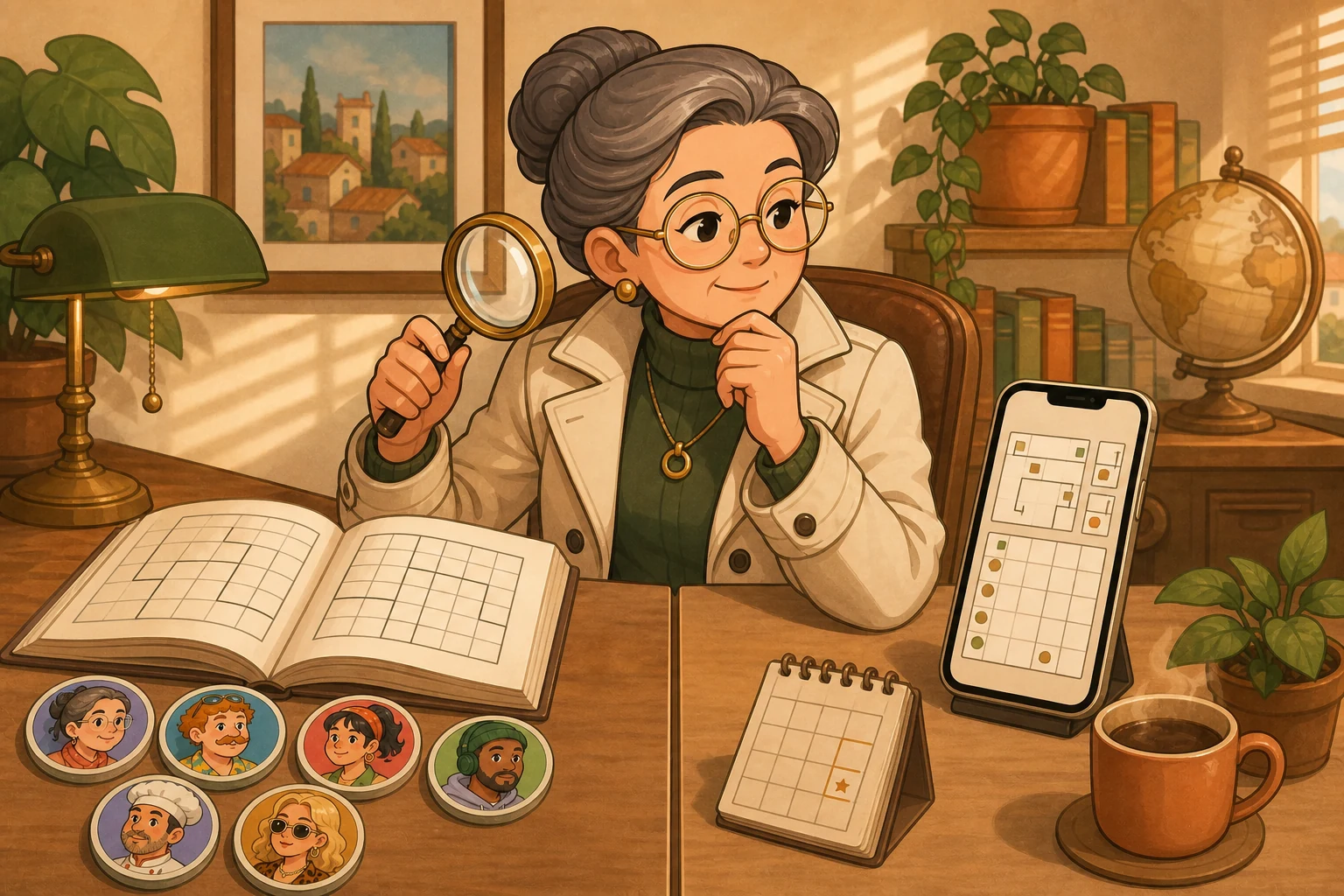
The biggest difference is how you play
The official Murdoku website offers puzzles to solve in a browser and cases to download and print. It also presents physical puzzle books: the first volume's official page describes 80 cases illustrated in colour. That makes Murdoku a natural fit if you like solving on paper, carrying a puzzle book or switching between web and print.
Doña Lupa is designed around the iPhone. Its first interactive case introduces the mechanics on the board, notes stay inside the puzzle and the app includes a daily case. Four themed worlds group the mysteries, so progression feels closer to a mobile game than to working through a puzzle book.
Similar deductions, different rules
According to the official Murdoku book rules, each person appears once in every row and once in every column. The guilty person must also be alone with the victim inside the same area. That final condition ties the character layout to solving the murder.
In Doña Lupa, each suspect appears once per row, once per column and once per outlined zone. Every story clue is true and those clues combine with all three grid constraints to produce one solution. Both games reward elimination, but an area in Murdoku and a zone in Doña Lupa do not perform the same job, so techniques do not transfer perfectly.
| Feature | Murdoku | Doña Lupa |
|---|---|---|
| Format | Web, printable puzzles and books | iPhone app |
| Structure | One person per row and column; culprit and victim share an area alone | One suspect per row, column and zone, plus truthful clues |
| Stories | Murder cases | Cozy comic mysteries without bloody crimes |
| Pace | Choose a web, printable or book puzzle | Tutorial, five difficulties, four worlds and a daily case |
| Access | Free web play and printables; paid books | Free download and easy cases; monthly subscription or lifetime unlock |
Tone and presentation change the experience
Murdoku builds its premise around finding who killed the victim. Doña Lupa avoids bloody crimes: its detective may investigate a missing lunch, a suspicious dessert or a coffee-related offence. The choice is therefore not only about difficulty. It is also about the atmosphere you want between deductions.
Presentation matters too. Murdoku's books work as illustrated objects you can solve at your own pace. Doña Lupa uses animated characters, interactive help and a short narrative payoff after the grid is complete. Neither approach is universally better: one favours paper and murder cases, while the other favours a phone, persistent notes and cozy humour.
If you prefer playing on iPhone
Try an easy case before deciding.
Which one should you choose?
Choose Murdoku if you want its original cases, a physical book or a printable grid. Choose Doña Lupa if you want to solve on iPhone, receive a daily case, move through themed worlds and keep the mood light. Since both give you a free way to start, the fairest test is to play one official case from each and see which rules, pace and presentation suit you.
This comparison uses information published by each product's owners and checked on 5 September 2026. Catalogues, prices and platforms may change. Check the official Murdoku website, its book page and the official Doña Lupa App Store listing for current information. Trademark ownership can be checked in the EUIPO register.
Straight answers
Questions about the comparison
Is Doña Lupa the official Murdoku app?
No. Doña Lupa is an independent app and is not affiliated with, sponsored by or authorized by the owners of MURDOKU.
Do Murdoku and Doña Lupa use the same rules?
No. The official Murdoku rules place one person per row and column and put the culprit alone with the victim in an area. Doña Lupa places one suspect per row, column and zone, then combines that structure with truthful story clues.